
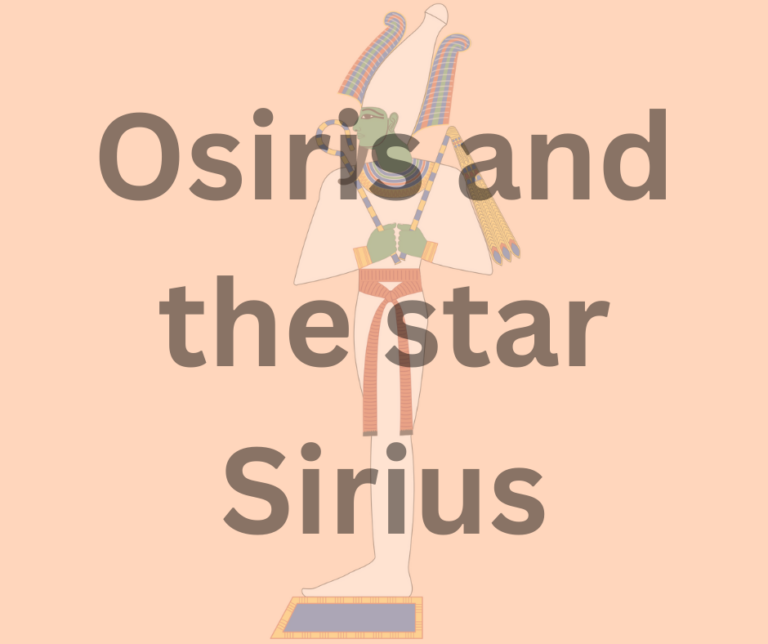
In Egyptian mythology, Osiris is closely associated with the star Sirius, known as "Sopdeth" or "Sothis" in ancient Egyptian. The rising of Sirius, the brightest star in the night sky, was a celestial event of great significance to the ancient Egyptians and had a deep connection to Osiris, the god of agriculture and the annual flooding of the Nile.
The Myth of Osiris: The Tale of Death and Resurrection
The flooding of the Nile
The annual flooding of the Nile River was a crucial event in ancient Egypt. It enriched the agricultural lands with nutrients, ensuring abundant harvests and the prosperity of the people. The timing of the flooding of the Nile is closely associated with the heliocene rising of Sirius, which is just before sunrise. The Egyptians noticed that the reappearance of Sirius in the sky before dawn was a signal of the impending flooding of the Nile.
Read also: Ancient Egyptian polytheism – the dawn of faith
Osiris, fertility and agriculture
Osiris is not only the god of the afterlife and resurrection, but also a deity closely associated with fertility and agriculture. His association with the annual flooding of the Nile reinforces his role as a god bringing life, sustenance and abundance to the earth. The flooding of the Nile is seen as a reflection of his power as it rejuvenates the soil and allows crops to flourish.
The Celestial Journey of Osiris
The mythological symbolism of Osiris' journey reflects the movement of Sirius in the night sky. Just as Osiris is associated with death, rebirth and the afterlife, Sirius is associated with the cycle of life and death. When the star disappears from the night sky, it is believed to have entered the realm of the dead, like God in the afterlife.
The annual appearance of Sirius, heralding the flooding of the Nile and the resulting fertility of the land, is seen as a direct manifestation of the life-giving power of Isis.
The reappearance of Sirius in the eastern sky, just before dawn, is seen as a symbol of resurrection and renewal, alongside Osiris' own resurrection from Isis. This celestial event is consistent with the Egyptian belief in the cyclical nature of existence, where death is followed by rebirth and darkness gives way to light.
Dog Days
The heliiacal rising of Sirius also marks the beginning of the Dog Days. This is an important event in the Egyptian calendar, celebrated with rituals and festivals. It heralds the flooding of the river, ushers in a new agricultural season, and is a time of hope and anticipation for the people of Egypt. This period also brings intense heat to the area. The connection between Sirius and the hot, dry season is reflected in its relationship with the goddess Sekhmet, who represents the scorching sun. This period was believed to be a time of divine wrath and healing, during which rituals were performed to appease the goddess.
The relationship between Osiris and the star Sirius is a central theme in Egyptian cosmology. It symbolizes the interconnectedness of the natural world, the cycle of life and death, and the promise of rebirth. This celestial connection enriches Egyptian mythology, rituals, and cultural practices, highlighting the enduring significance of the annual flooding of the Nile and the renewal it brings to Egyptians.






 English
  Bulgarian