

In Egypt, an Egyptian is not born a citizen. When he comes into this world, he is an Egyptian, but not a citizen of Egypt. This was because it was believed that citizenship, mature participation in the affairs of state, required devotion, enlightenment, dedication, and if necessary, sacrifice.
Among the various rituals and customs of ancient Egypt, the ceremony of the "children's tassel", has social and religious significance. We will look at this lesser known but important ritual, revealing its implications for health, protection and social status, as well as its relationship to Egyptian beliefs about the afterlife.
The "side tuft of youth" ceremony is an important event in the life of a young Egyptian child. When the child is between the ages of 15 and 16, a lock of hair is cut off, which is often left to grow from birth.
Symbolism of the tuft
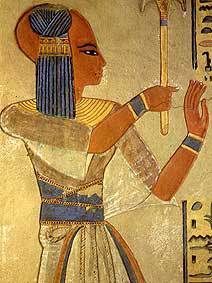
The tresses are long, braided, covering the left eye, usually worn by young boys in noble families, although it also appears in depictions of girls. This headdress symbolizes youth and purity, attributes closely associated with innocence and the potential for living in accordance with Maat. They represent the child's progress toward moral and social responsibility, a step toward adherence to the principles of Maat.
Children have been taught the concepts of truth, balance and moral rectitude from an early age. The stories, proverbs, and instructions that are part of their education emphasize these values, guiding children toward a life consistent with Maat. Families play a crucial role in imparting these values. The ceremony of the "tuft of hair," is a manifestation of this educational process, symbolizing the role of community and family in guiding the young toward the path of righteousness. As long as this tuft is present, the child is not responsible for knowledge he does not possess and does not assume guilt for decisions he is unworthy to make.
Read also: The principles of Maat
The ritual of children's tresses
The ritual consisted of the following: all the candidates for citizens of Egypt gathered and called upon the gods. They made the youth accept the responsibility of Egyptian citizenship. The first requirement was to obey the laws of the gods Osiris and Amenhotep. They must also obey the laws of the state. If they did not strictly observe the laws, it was impossible for the children to become citizens. They had to be faithful and honest in their judgment, respond to people in need, help the sick, and always make donations.
The ceremony is governed by a set of rules and practices that vary somewhat depending on the social status of the family. However, common elements include:
TimeA: The ceremony is often timed to coincide with significant dates or events, such as religious festivals, to maximize auspiciousness.
Priestly participation: A priest or revered figure often performs the ceremony, imbued with religious sanctity .
Offerings и Prayers: The ceremony includes offerings to deities, especially those associated with protection and childhood, such as Bes and Taveret. Prayers are recited for the health and well-being of the child.
Save the strandA: The cut lock of hair was kept as a talisman or offered to a deity.
Feasting и CelebratingA: The ceremony was a communal celebration, with family and neighbors participating in feasts and celebrations marking the child's transition into a new phase of life.The integration of Maat into the education and upbringing of children was central to ancient Egyptian society.
In a world where infant mortality is high, the growth of a healthy child is crucial. A lock of hair was believed to have protective properties. By cutting it in a ritualistic manner, the child was believed to be cleansed of any remaining infantile weakness or vulnerability. The ceremony often included prayers and offerings to the gods, particularly to protective deities such as Bes and Taveret, to preserve the child's health and ensure their prosperous growth.
After the ceremony
The ritual also served an important social function, marking the child's place in society. The manner in which the ceremony was conducted and the celebrations that accompanied it often reflected the social status of the family. In some cases, especially within the royal family or the elite, the event could be quite elaborate, involving feasts and elaborate rituals, thus reaffirming the family's status in the social hierarchy of ancient Egypt. Despite the status it received after the ceremony:
Independence: The child was already considered more independent and responsible, becoming an Egyptian citizen after moving away from the vulnerability of childhood.
Social Confession: The ceremony marked the formal introduction of the child into the community, recognizing him or her as a growing member of the community - a relationship that cannot be done without.
Spiritual protectionA: The act of cutting off a strand was believed to renew the child's spiritual protection, severing any remaining infantile vulnerabilities.
Preparation For education и trainingA: After the ceremony, children often begin their education or vocational training, preparing for their roles in society.
Link с The AfterlifeA: Transformation is not only in the physical realm, but it also has implications for the afterlife. The preserved lock of hair, often kept with other personal possessions, is a symbolic link between the child's earthly existence and their spiritual path. In the context of beliefs about the afterlife, the ceremony is seen as a preparatory step, ensuring that the child is endowed with the necessary spiritual strength and protection for their eventual journey to the afterlife. This practice reflects a deep-rooted belief in the importance of preserving aspects of the physical self for the journey to the afterlife.





 English
  Bulgarian