

The study of consciousness and the nature of reality is an age-old pursuit, deeply rooted in spiritual, philosophical and metaphysical traditions. Across cultures and belief systems, the idea of multiple dimensions of existence has been central to understanding the complex layers of human experience and the broader cosmic structure. These dimensions are often thought to correspond to different energy bodies or fields that interact with physical form, shaping not only our perceptions of reality but also the evolution of our consciousness. In this context, the idea of the 15 dimensions presents a model for how human consciousness evolves and interacts with different energy fields.
While this concept is primarily spiritual in nature, it shows us the multidimensionality of the human experience, suggesting that consciousness is not limited to our physical bodies, but extends to different planes of existence. We will delve into the characteristics of each of these 15 dimensions, exploring their relationship to human energy bodies and consciousness, and how these dimensions inform the awakening and expansion of human potential.
Inspiration in the ancient teachings of the 15 dimensions:
The idea of multiple dimensions, although explored in modern metaphysical systems, finds its roots in ancient teachings from various spiritual traditions. Many ancient cultures and schools of thought suggest that human beings exist not only in the material world, but also in multiple layers of energy realms. These teachings provide symbolic and philosophical frameworks for understanding the interaction between these realms and the nature of human consciousness. The concept of multiple dimensions or levels of existence is often described in ways that are consistent with the understanding of the 15 dimensions and energy bodies discussed today.
Vedic teachings
In the Vedic tradition of ancient India, which forms the basis for many of the spiritual teachings of Hinduism, the concept of multiple levels of existence is well established. The Upanishads, a collection of philosophical texts, describe the existence of different levels of reality - material, mental and spiritual. Kshetra (field) and Purusha (consciousness) are believed to exist at different levels of experience. These concepts correlate with the idea of multiple dimensions affecting consciousness at different stages of evolution. Vedic texts also discuss the chakra system, which can be seen as corresponding to different energy bodies or levels of awareness. The integration of these levels forms the basis for the ascent of consciousness from the physical to the spiritual realms.
Read also: Subtle energy bodies
Hermetic doctrines
The hermetic tradition, derived from ancient Egyptian and Greco-Roman philosophies, teaches the concept of the principle of "As Above, So Below," which emphasizes the correspondence between the material world and the higher spiritual realms. According to hermetic thought, reality is layered, with the higher levels influencing the lower. This is reflected in the idea of ascending through dimensions of higher vibrational frequencies, similar to the journey of consciousness described in the 15-dimensional framework. Hermetic texts such as the Emerald Tablets speak of the "Seven Cosmic Laws", which can be seen as steps towards aligning human consciousness with divine wisdom, resonating with dimensional ascension teachings.
Tibetan Buddhism
Tibetan Buddhism presents a multilayered view of existence, describing the Buddha's Three Kaya or "bodies" - the Dharmakaya (the body of truth), the Sambhogakaya (the body of bliss), and the Nirmanakaya (the physical body). These layers correspond to the higher states of consciousness and are similar to the spiritual bodies described in modern metaphysical teachings. Tibetan Buddhist teachings on meditation and mind expansion often describe transcending the material world to experience the more subtle, energetic dimensions of existence. Journeying through these planes is consistent with the idea of progressive spiritual awakening, similar to ascending through different dimensions that influence human consciousness.
The Kabbalistic Tradition
In Kabbalah, the concept of multiple levels of existence is symbolized by the Tree of Life, which outlines the structure of the universe and the soul. The Tree of Life is divided into ten spheres or sephiroth, each representing a different aspect of divine consciousness. These spheres represent both physical and metaphysical realities, creating a map of spiritual ascent through which the soul travels to unite with the divine. The teachings reflect the idea of moving through multiple layers of existence, aligning with the understanding of how human consciousness can evolve through different dimensions.
Read also: Kabbalah and the Journey to the Divine
Read also: Kabbalah, quantum physics and sacred geometry - parallels
Ancient Egyptian teachings
As you know from the articles on Ancient Egypt, the importance of the afterlife and the movement of consciousness through different planes of existence was key. The Egyptian Book of the Dead describes the journey of the soul through different realms after death, with the soul having to pass through different gates or levels, each representing a different dimension of experience. These teachings resonate with the modern concept of ascending through multiple dimensions to higher states of consciousness and being.
Read also: Basics of the Book of the Dead
Platonic and Neoplatonic thought
The philosopher Plato and later Neoplatonists, such as Plotinus, postulated that reality exists in a hierarchy of forms, with the material world at the lowest level and the realm of the One (or divine source) at the highest level. According to this view, the soul must transcend the material realm in order to reunite with the divine, similar to the ascent through the 15 dimensions described in modern teachings. The Neoplatonists believed in the journey of the soul through different levels of reality, each more perfect and closer to the divine essence.
Ancient teachings from different cultures and philosophical systems provide a rich foundation for modern understanding of multiple dimensions and energy bodies. Although specific terminology and frameworks vary, the basic idea remains consistent: human consciousness exists in different layers of reality and through spiritual practices it can evolve and ascend through these dimensions. The 15-dimensional model draws on these ancient sources, offering a modern interpretation of how we can understand our spiritual evolution and our relationship to the cosmos. These teachings remind us of the vast potential of human consciousness and the expansive nature of reality beyond the material world.
Measurements
We will now focus on the characteristics, consciousness and energy bodies in the 15 dimensions. We will look at how they interact and affect human consciousness and energy.
Dimension 1: The dimension of density and matter
FeaturesA: The first dimension consists of pure physical material. It is fundamental, representing the most basic forms of energy that are closely related to matter - such as atoms and subatomic particles. Everything in our material world, from the smallest particle to the largest structures, originates here.
ConsciousnessA: At this level the mind is inert and passive. It is not yet differentiated as awareness or activity, but is simply the seed of potential. There is no experience of individuality or self-consciousness - only the raw potential to become.
Read also: Basic concepts in Kabbalah - Yesod (foundation)
Energy body: The physical body is the main link to this dimension. Our biological functions and material existence are governed by the basic principles of the first dimension. Physical form itself is the densest expression of energy in this dimension, where matter is most compact and solid.
Dimension 2: The dimension of duality
FeaturesA: The second dimension represents the interaction of opposites. This is where polarity appears, creating a balance between forces such as light and dark, masculine and feminine, good and bad. This dimension allows for contrast, which is essential to the experience of movement, growth and change.
ConsciousnessA: The mind here begins to recognize and respond to duality. It is reactive and develops awareness of opposing forces, but does not yet integrate them into a cohesive whole. Awareness is focused on survival, balance and reaction rather than choice.
Energy bodyA: The etheric body is connected to the second dimension. This body is the energy template that organizes the physical form and maintains its structure. The etheric body helps navigate the energies of duality, influencing physical health, vitality and life force derived from the energetic balance of opposing forces.
Dimension 3: The dimension of physical experience and time
FeaturesA: The third dimension is the familiar world of time, space and linear progression. It is the world of physical form, with distinct boundaries and separate objects existing in the continuum of time. This is where our senses can perceive the world through tangible, visible phenomena.
ConsciousnessA: In this dimension, consciousness is aware of itself and its surroundings, but is still limited by physical limitations. The perception of time is linear and space is felt to be segmented, leading to an experience of individual identity. The focus is on survival, material experience and the unfolding of events over time.
Energy Body: The emotional body is most active here. Emotions are often triggered by physical events and experiences. The emotional body works with the mental body to process experiences, often tying emotions to time and space (e.g., past traumas, regrets, desires for the future). These emotions shape how we experience the 3D world.
Dimension 4: The dimension of the emotional and astral spheres
FeaturesA: This dimension is known as the astral plane and is often described as the emotional or ethereal realm. It exists alongside the physical world and is not bound by the same limitations of time and space. Here emotional and mental states form the fabric of reality.
ConsciousnessA: Consciousness is more fluid and flexible in this dimension. It is governed by emotional and mental states and experiences often manifest based on inner desires, fears and beliefs. While the 3D world is structured, the 4th dimension is more subjective and is influenced by internal energies.
Energy body: The astral body and the mental body are most involved with this dimension. The astral body stores emotional energies and can manifest experiences based on the emotional state, such as dreams or astral projections. The mental body influences how we interpret and engage with emotional experiences in this realm.
Dimension 5: The Dimension of Light and Spiritual Awareness
FeaturesA: The fifth dimension is where light energy dominates and consciousness expands into higher states of awareness. It is a realm of non-linear time where past, present and future exist simultaneously. Light here is a symbol of spiritual truth, insight and awareness.
ConsciousnessA: Consciousness begins to transcend the boundaries of time and space. There is greater clarity of spiritual purpose and the individual self begins to experience oneness with higher consciousness. Awareness expands and self-realization occurs at a deeper level.
Energy bodyA: The etheric pattern and the celestial body are most active here. The etheric template contains the spiritual plane of the soul and is responsible for directing the evolution of the physical body through energy patterns. The celestial body connects with divine wisdom and higher consciousness, acting as a a bridge to deeper spiritual realms.
Dimension 6: The Dimension of One Consciousness
FeaturesA: This dimension is the realm of unity and interconnectedness. Here the separation between individual beings fades and everything is recognized as part of the same cosmic fabric. It represents the point at which dualities (such as self and others) dissolve.
ConsciousnessA: Consciousness in this dimension experiences pure oneness. There is no sense of individual separation as all things are seen as interconnected. The experience of unity and collective consciousness dominates in this dimension, allowing a deep understanding of the interdependence of all life.
Energy bodyA: The causal body becomes more activated. The causal body preserves the accumulated wisdom of the soul through lifetimes. In this dimension, the causal body transcends individual experiences, reflecting collective wisdom and understanding of universal truths.
Dimension 7: The Dimension of Divine Will and Purpose
FeaturesA: This dimension is in accordance with the divine plan of creation and is the realm of cosmic order. This is the space where the divine will and purpose come into alignment with the consciousness of the individual. Here the interconnectedness of all life is understood as part of a greater divine plan.
ConsciousnessA: Consciousness in the seventh dimension holds awareness of divine order, seeing all creation as part of a purposeful design. There is clarity around the ultimate purpose of existence and the individual begins to perceive the flow of divine time and universal law.
Energy body: The causal body and the spiritual body are the most active. The causal body contains knowledge from past lives and lessons, while the spiritual body connects with the universal mind and divine wisdom. This connection helps align the personal will with the divine will, directing the soul toward a higher purpose.
Dimension 8: The dimension of the source consciousness
FeaturesA: The eighth dimension is the realm of the absolute energy of the Source. It is a field of pure, unmanifest potential - an infinite wellspring of creative energy, light and love. Here there is no separation between creator and creation.
ConsciousnessA: In this dimension, consciousness merges with the Divine Source. It experiences oneness with ultimate truth and ultimate reality without feeling the difference between individual and collective existence. This is pure creative potential and all possibilities are available.
Energy bodyA: The spirit body and the light body are the most active. The light body contains the divine plane and represents the fully awakened and activated state of consciousness, while the spirit body connects the individual to Source, radiating pure divine energy and potential.
Dimensions 9-12: The Realms of Cosmic and Universal Consciousness
FeaturesA: These dimensions represent the realms where individual consciousness merges with universal consciousness. They are the higher realms of cosmic wisdom and divine intelligence, often associated with the Christ-Sophia principles of unity, balance and cosmic love.
ConsciousnessA: Consciousness is in accordance with cosmic intelligence and universal law. In these dimensions, individual identity is intertwined with universal consciousness, embodying the highest level of understanding and wisdom. All universal truths are known and the individual's consciousness is fully integrated with the divine mind.
Energy body: the universal body, the cosmic body, and the light body become united. The consciousness of the individual becomes fully attuned to the universal principles embodying the highest frequencies of love, wisdom and divine order.
Dimensions 13-15: The Realms of Infinite Divine Potential
FeaturesA: These dimensions represent the highest planes of existence, where consciousness transcends all form and limitation. Here existence is purely energetic and creative, with infinite potential for manifesting new universes, realities and dimensions.
ConsciousnessA: Consciousness becomes pure, unmanifest energy, a creative force capable of creating and dissolving realities. It is not limited by time, space or form, but is the essence of all that exists. Consciousness here is infinitely creative, transcending all duality and form.
Energy body: The output body becomes integrated with all other energy bodies. At this level, the individual is no longer separate, but a fully conscious aspect of Source, capable of creating infinite possibilities.
As consciousness evolves through the 15 dimensions, each level represents a deeper, more refined understanding of existence. The energy bodies-the physical, etheric, emotional, mental, astral, causal, spiritual, and light bodies-each resonate with the energies of specific dimensions. These bodies evolve as consciousness transcends the limitations of the lower dimensions, activating higher states of awareness, spiritual connection, and creative Potential. This interconnectedness of dimensions and energy bodies reflects the multidimensional nature of human consciousness, where every aspect of self is intricately woven into the fabric of the cosmos, moving toward greater unity and divine realization.
Scientific evidence
Quantum physics and the nature of reality
Quantum mechanics, the branch of physics that deals with subatomic particles, offers some concepts that, while not directly supporting "subtle bodies" or metaphysical dimensions, challenge our understanding of reality. For example, the law of disloyalty. Quantum entanglement, in which particles bind together and can instantaneously influence each other, implies that everything in the universe is interconnected. This idea of non-local connections between distant objects in the cosmos can be seen as a metaphor for the interconnectedness proposed in many spiritual traditions, where all energy bodies or layers of consciousness are connected in different dimensions.
Another obvious example is дwave-particle warfare. In quantum theory, particles (such as electrons) can behave as both particles and waves, depending on how they are observed. Some metaphysical teachings use similar ideas to describe the fluidity and changing nature of consciousness and energy bodies. This wave-like nature can be compared loosely to the idea that consciousness and energy may not be limited to specific material forms, but exist in different states or "dimensions."
String theory and extra dimensions:
String theory, a theoretical framework in physics, proposes the existence of additional spatial dimensions beyond the known three-dimensional world. In string theory, fundamental particles are not point-like, but instead, are vibrating strings of energy that could exist in higher dimensions.
The extra dimensions in String Theory suggest that there are up to 10 or 11 dimensions in total, depending on the version of the theory. These extra dimensions are thought to be compacted (shrunk into very small spaces), making them imperceptible to us in everyday life. Although these dimensions are not directly related to metaphysical bodies, they hint at the possibility of multiple, unobserved realms of reality that could correspond to ideas of non-physical dimensions.
Some versions of String Theory predict the existence of parallel universes or "multiverses", which could be conceptually related to the idea of multiple layers or dimensions of existence. These ideas, however, remain speculative and have not yet been empirically verified.
Energy fields and the human body
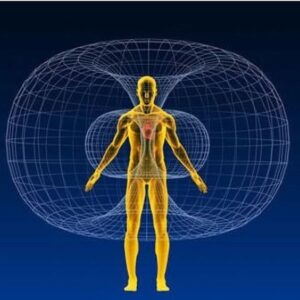
In terms of energy bodies, there is some scientific research on the energy fields around the human body. The human body generates measurable electromagnetic field, which is produced by the electrical activity of the brain and nervous system. Technologies such as electroencephalograms (EEG) and magnetoencephalograms (MEG) measure the electrical and magnetic fields of the brain, respectively. Although these fields do not correspond directly to "etheric" or "astral" bodies, they do indicate that the human body has an energy field.
Some researchers in fields such as biophysics and integrative medicine have explored the idea of a "biofield," which refers to the energy field around the bodywhich can affect health and well-being. Read more in: The impact of different electromagnetic frequencies and in The human body: a complex electrical system
Quantum biology is an emerging field that studies how quantum phenomena can affect biological processes such as photosynthesis, enzymatic reactions or even consciousness. Although still in its infancy, some theorists suggest that quantum mechanics may play a role in the way consciousness functions. This may offer potential circumstantial evidence for the idea that consciousness exists beyond the physical brain and could align with metaphysical views of the "mind body" or higher states of consciousness.
Near-death experiences and studies of consciousness:
Although not directly related to the concept of multiple dimensions, near-death experiences (NDEs) have been extensively studied in the context of human consciousness. Some people report experiences with leaving tech physical bodies, traveling through tunnels, meeting with light beings, having vast, transcendent experiences that suggest awareness beyond physical form. These experiences are sometimes interpreted in metaphysical terms as evidence of an "astral body" or a passage to higher dimensions
Chakras and energy centres
Many spiritual systems (especially those from Eastern traditions, such as yoga and meditation) describe energy centers in the body, such as chakras, that are associated with various aspects of consciousness and well-being. These are often associated with the concept of energy bodies. Research shows that the human body emits biophotons (light particles) that are often associated with cellular communication and energy processes. Some believe that these biophotons are a physical manifestation of the subtle energy described in metaphysical traditions. However, there is no direct scientific evidence linking these emissions to specific energy bodies such as the etheric or astral bodies.
Read also: Brain waves
Although there is no direct scientific evidence for the existence of subtle bodies or higher dimensions as described in metaphysical traditions, some areas of science point intriguingly to parallels that hint at the possibility of realities beyond the material world.






 English
  Bulgarian