
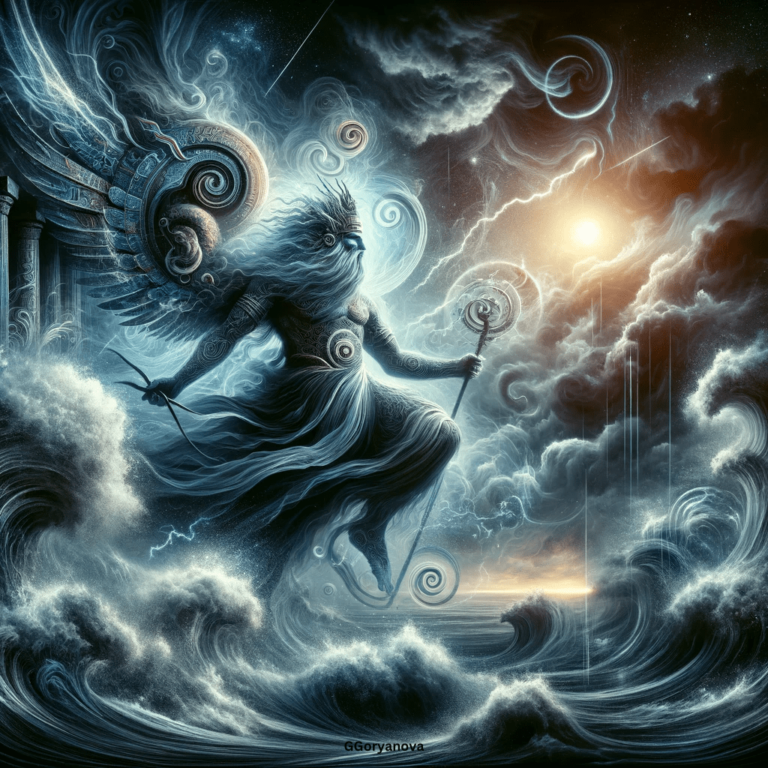
Long ago, in the ancient land of Sumer, there were two powerful gods who ruled over different aspects of the world. Enlil was the god of the air, storms, and the earth, and was known for his authoritative and sometimes stern behavior. Enki, on the other hand, was the god of water, wisdom and creative energy, known for his inventive and compassionate nature.
One day the gods decided to create human beings to serve them and to toil on the earth. Enlil was responsible for crafting the humans from clay, breathing life into them and determining their fate. He saw humans as servants meant to do the bidding of the gods.
However, Enki, in his wisdom, saw the potential in the newly created people. He gave them knowledge of farming, writing and other crafts. Enki's gifts empowered humanity to flourish and build civilizations. He felt deep affection for the creatures and often stepped in to protect them when Enlil's judgments brought disaster.
The Flood
One important event in the myth involves Atrahasis, a wise man chosen by the Enchi, who warned humanity of an impending flood sent by Enlil to destroy mankind due to their noisy and troublesome nature. Enki instructs Atrahasis to build a boat to save himself, his family, and various animals. When the flood came, Enlil was initially angry, but when he saw the extent of the devastation, he relented and gave humanity another chance.
Enki's intervention in saving mankind from the flood is a key moment in the myth, highlighting his compassion and the tension between his more lenient approach and Enlil's harsh sentences.
Read also: Gods in ancient Sumer
When Enlil learned of Enki's intervention, he was furious. He had planned the flood to cleanse the land of overpopulation. He had not intended for a single person to survive. He confronted Enki, accusing him of betraying the divine plan and causing chaos.
Despite Enlil's anger, the flood arrived as predicted. The flood inundated the earth, submerging cities and drowning most of humanity. The cataclysmic event was a devastating and transformative moment in myth, representing both the cleansing and renewal of life on Earth.
After the flood waters receded, the surviving humans and animals emerged from the ark, marking a new beginning for humanity. Enki continued to support and guide humanity in the world after the flood, helping it to rebuild and repopulate the earth.
The importance of survival
Enlil eventually realized the importance of humanity's survival. He understood that they played a vital role in serving the gods through their worship and offerings. The survival of the remnants of humanity ensures the continuity of these religious practices that are essential to the divine order.
Over time, the rivalry between Enlil and Enki continues to shape the course of human history. Enlil is often seen as the stern enforcer of divine decrees, while Enki remains the source of wisdom, innovation, and creativity for humanity.
Enlil's power over the earth meant that he could bring forth blessings, such as fertile harvests and prosperity, but he could also unleash destructive forces, such as storms and droughts, when he was displeased with the actions of mankind. Enki, on the other hand, constantly offered guidance and support to people, helping them cope with life's challenges.
One of the most notable episodes involves Enki helping humanity discover the secret to immortality. Enki advises a mortal named Adapa not to eat the food and drink offered by the gods when summoned to their heavenly abode, as this would grant him eternal life. Adapa followed Enki's advice, missing out on immortality but gaining Enki's favour and wisdom.
The myth of Enlil and Enki encapsulates the ongoing tensions between authority and compassion, judgment and benevolence within the Sumerian pantheon. It reflects the Sumerians' recognition of the complex relationship between the divine and the mortal, and the idea that the gods could both challenge and help humanity.






 English
  Bulgarian