
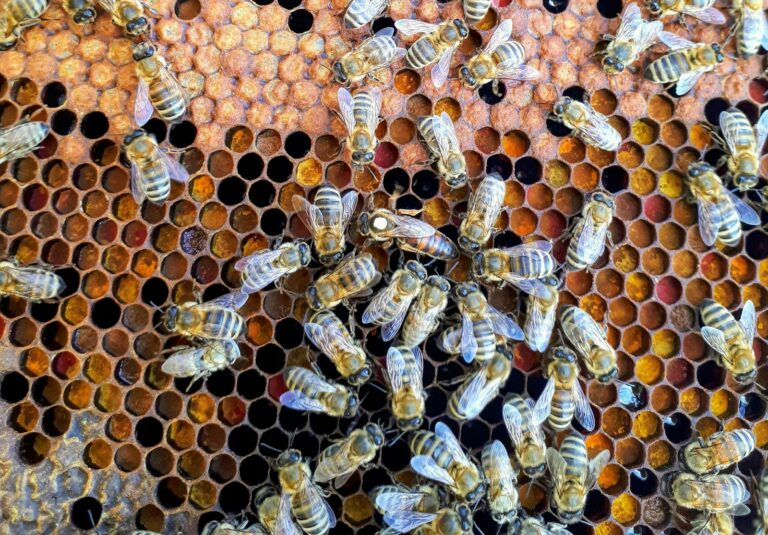
The Bee
The bee is a symbol of Hardworking. They work tirelessly to collect nectar and pollen to gather them into the hive. This hard work and dedication to the hive is a symbol of diligence and perseverance in our own lives.
They are also a symbol of unity and cooperation. They are known for the obedience of the queen bee. They work together in perfect harmony to achieve their goals. Each bee plays a vital role in the functioning of the hive as a whole. It is the idea of working together, for a common goal.
Another symbol is that of Fertility. Bees are responsible for the pollination of plants and flowers, which enables the growth and production of fruits and vegetables. This tells us to be fruitful in our own lives as well, to keep growing, to help others to thrive as well.
"If the bee disappears from the surface of the globe, then man will have only four years to live. No more bees, no more pollination, no more plants, no more animals, no more man" - Albert Einstein.
Last but not least, bees are a symbol of Wisdom. They can communicate with each other through complex dances and movements, allowing them to work together in perfect harmony.
The bee was a symbol of the Egyptian pharaohs, embodying royalty and power. The Greeks and Romans also used the bee as a symbol of industry and hard work. The bee has also been used in Judaism and Christian symbolism to represent the virtues of diligence, obedience, and order.
Read also: Symbolism in the Epic of Gilgamesh
The bee in ancient Egypt
The ancient Egyptians were aware of the importance of the bee to our existence. They attached great religious and spiritual importance to the honey bee. It was highly revered, a symbol of royalty, and the bee hieroglyph was the symbol of Lower Egypt. Belief has it that honeybees are formed from the tears of the sun god Ra, which when falling from the sky and touching the earth turn into bees.
Honey has been used by all classes for both religious and practical purposes. Sacred animals were fed on cakes sweetened with honey. It was used as a sweetener for food and wine, to heal wounds, and also in cosmetics. Wax was used as a dye, in boat and ship building.
Not only was it used for the living, jars of honey were left in tombs as an offering to the dead. Wax was used in the mummification process with small body holes plugged with beeswax.
The symbolic meaning of the bee in Freemasonry
The bee is one of the most important symbols in Freemasonry, representing the virtues of hard work, diligence and cooperation. It serves as a reminder to Masons to be good citizens and work for the public good.
In Freemasonry, the bee is a symbol of laborunion and hard work for centuries. The bee's tireless work ethic and its ability to work together as a collective to achieve a common goal is a fitting symbol for Freemasonry, which emphasizes the importance of working together and cooperating. Embodying these virtues builds the quest for a better world for ourselves and future generations.
The bee is a reminder of the importance of education and cultivation. They are known for their intelligence and ability to learn and adapt. Freemasons seek knowledge and constantly strive to improve themselves and their understanding of the world around them.
In modern Freemasonry, the bee continues to be an important symbol. The bee represents diligence, hard work and cooperation. These are values that are essential to the success of any society or organization. Hard work is important for the betterment of the community, teamwork and cooperation is realized to achieve set goals. It is important to embody the virtues of the bee in everyday life. The seven bees, often depicted in Masonic illustrations, represent the seven liberal arts and sciences that are the foundation of Masonic knowledge and wisdom.
The beehive
The Beehive is an emblem of Freemasonry, providing us with valuable lessons in hard work, unity and personal growth. It reveals the world of intelligent beings and how much more we can gain if we work in unison rather than separately. The Beehive shows the Masonic values, namely: a fulfilling life of service, harmony and self-improvement.
Hard work and perseverance
The beehive represents the virtues of hard work and perseverance, reminding us of the importance of dedication in all aspects of life. Just as bees tirelessly contribute to the well-being of their hive, Masons are inspired to apply these virtues, benefiting not only themselves but society as a whole.
Unity and cooperation
The cooperative nature of the bee community serves as a model for Masonic and social life. The hive symbolizes the strength found in unity, calling members to work together in harmony, support each other's efforts, and contribute to the common good.
Personal growth and community service
The hive, too, symbolizes the journey of personal development within a cohesive network. Freemasonry supports the development of individuality while encouraging active participation in the betterment of society. The Hive reminds us that personal achievement and social contribution go hand in hand.
In the rich symbolism of the beehive, Freemasons find inspiration to lead lives marked by hard work, unity, respect and growth. This emblem encourages all of us, Masons and non-Masons alike, to strive for a harmonious and industrious existence, improving the world for future generations. By embodying the lessons of the beehive, we contribute to a legacy of positivity and progress.
Bees have scent, or at least they should, because their feet are covered with the scents of millions of flowers.
-Ray Bradbury







 English
  Bulgarian