

Symbolism is a cornerstone of human culture, a universal language that transcends time and space. Among the myriad symbols that have worked their way into the fabric of human thought, few are as rich in meaning as the rose. This beautiful flower, with its delicate petals and sharp thorns, has captured the imagination of poets, mystics and scholars alike. But beyond its physical beauty, lies a deep well of symbolism and mysticism that spans traditions ranging from alchemy to esotericism, Freemasonry and the occult.
The rose in mythology and literature
The rose has long been a symbol of beauty, love and passion in mythology and literature. In Greek mythology it is associated with Aphrodite, the goddess of love, who is said to have created the first rose from her tears and the blood of her lover Adonis. The Greeks also saw it as a symbol of the rising of the sun or the coming of dawn. The Romans also revered her, dedicating her to Venus, their own goddess of love. In classical literature, the rose often symbolizes the fleeting nature of beauty and life, its petals a metaphor for the passage of time.
In the Middle Ages, the rose became a symbol of both the Virgin Mary and the Passion of Christ. In Dante's Divine Comedy, the rose represents divine love and purity, with the Mystical Rose symbolising the Virgin Mary herself, surrounded by saints. The complex symbolism of the rose in literature reflects its multifaceted role in human consciousness, where it serves as both a reminder of the temporal and a symbol of the eternal.
The Rose in Religious Symbolism
In Christianity, the rose is a symbol of the Virgin Mary, often called the "Mystical Rose". The red rose, in particular, is seen as a symbol of Christ's sacrifice, with its deep red color representing his blood. The five petals are associated with the five wounds of Christ, further reinforcing their connection to martyrdom and redemption.
Beyond Christianity, the flower appears in various forms in other world religions. In Sufism, the rose represents the soul's journey to God, with its opening symbolizing spiritual enlightenment. In Hinduism, it is often associated with divine love and beauty, symbolizing the unfolding of spiritual knowledge and the realization of inner truth.
Read the following: Ankh
Alchemical Symbolism
In alchemy, the rose has great importance. Alchemists saw it as a symbol of the ultimate goal of their work: the philosopher's stone, which was believed to grant immortality and turn base metals into gold. The rose, with its unfolding petals, was seen as a metaphor for the process of transformation in which the alchemist went through various stages of purification to achieve spiritual and material perfection.
It has also been used to represent the union of opposites, a central theme in alchemy. The red rose, symbolizing the active, masculine principle (sulfur), and the white rose, representing the passive, feminine principle (mercury), were often depicted together in alchemical imagery. This union is believed to produce the philosopher's stone, the "golden" state of spiritual and physical perfection.
The flower often appears alongside other alchemical symbols, such as the philosopher's stone, the ouroboros (the snake eating its own tail) and the phoenix, all of which represent different aspects of the alchemical process.
Esoteric interpretations of the rose
In esoteric traditions, the rose is a symbol of spiritual growth, enlightenment and the unfolding of the inner self. The many layers of rose petals are seen as representing the layers of the human soul that must be peeled away to reveal the true self. This symbolism is closely related to the concept of the "inner journey" in esoteric thought, where the seeker must pass through various stages of spiritual development to attain enlightenment.
The plant also appears in the teachings of the Kabbalah, where it is associated with the Sephiroth, or ten attributes through which God interacts with the world. It is particularly associated with Tiphereth, the Sephiroth of beauty and harmony, representing the balance between mercy and judgment. In this context, the rose symbolizes the soul's journey toward divine wisdom and understanding.
Masonic symbolism of the rose
The rose occupies a significant place in Masonic symbolism, especially in the Rosicrucian tradition, a mystical and esoteric order that is closely associated with Freemasonry. The Rosicrucians, who emerged in the early 17th century, adopted the symbol of the rose as the central emblem of their order. It was often depicted with a cross, symbolizing the Rosicrucian quest for spiritual enlightenment and the pursuit of hidden knowledge.

In Freemasonry, the rose is also associated with the concept of mystery and the inner mysteries of the order. The rose is often used in Masonic rituals and ceremonies as a symbol of the initiate's journey to enlightenment, representing the flowering of inner wisdom and the discovery of hidden truths.
Occult meaning of the rose
In occult practices, the rose is often seen as a symbol of secret and hidden knowledge. The phrase "sub rosa," meaning "under the rose," comes from ancient Roman times, when a rose was hung over a meeting table as a symbol that conversations held under it should remain private. This practice carried over into medieval and Renaissance occultism, where it became a symbol of the secret nature of occult knowledge.
The flower is also used in various occult rituals and practices as a symbol of transformation and attainment of higher knowledge. The plant's connection to the divine and spiritual realm makes it a powerful symbol in the occult, where it is often used to represent the soul's journey towards enlightenment and the revelation of hidden truths.
The Rose in Tarot and Divination
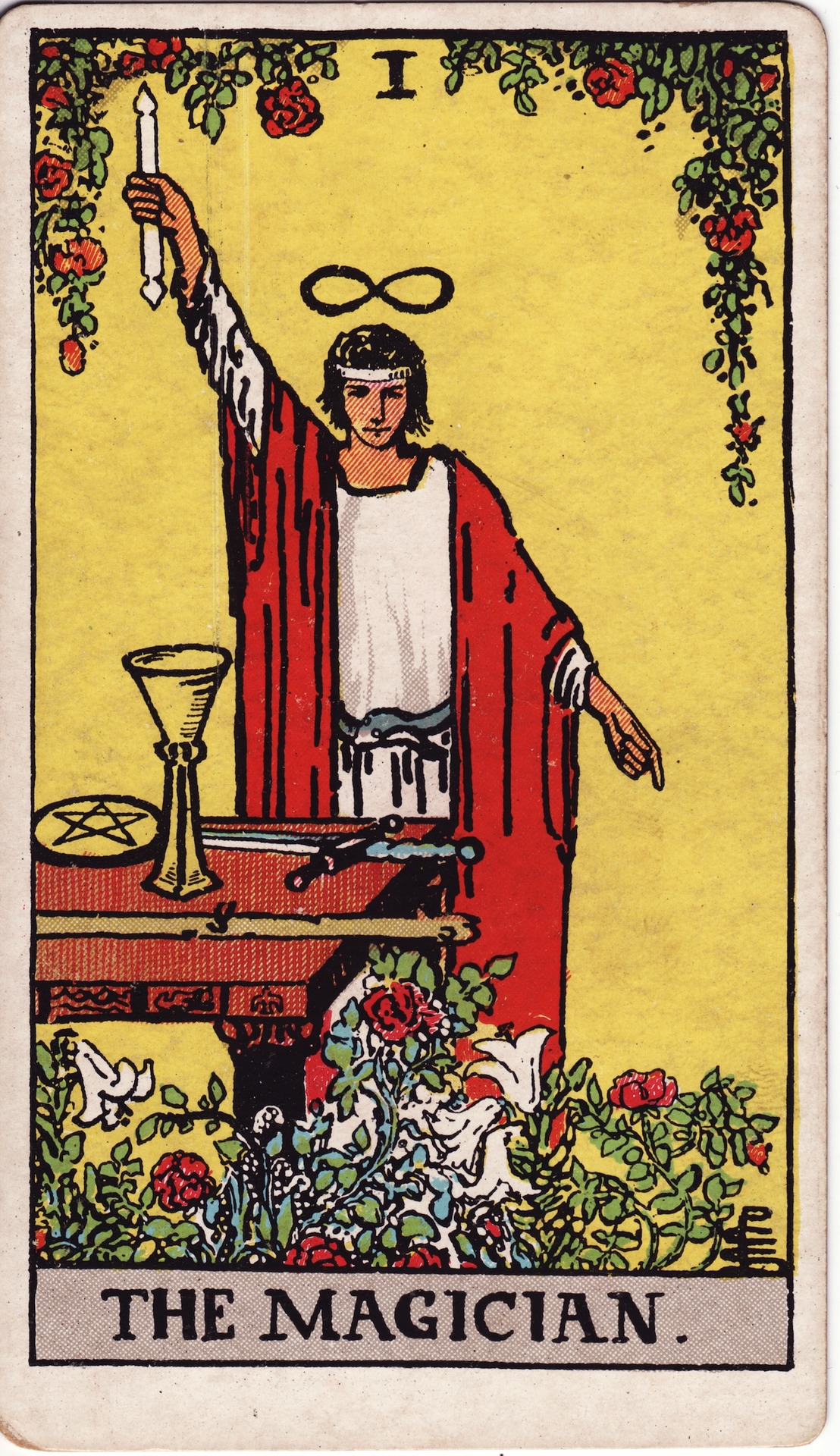
In the Tarot, the flower appears in several key cards, each of which symbolizes different aspects of its mystical meaning. The rose is most prominently represented in the Fool card, the zero card, the beginning, where it represents purity and the unfolding of life's path. It also appears in the Magician card, symbolizing the flowering of potential and the power of transformation. In the Death card, the rose is depicted as a white flower, symbolizing rebirth, renewal and transformation of the soul.
The rose as a symbol of love and sacrifice
The rose's association with love is perhaps its most famous symbolism. In mystical traditions it represents divine love, with its beauty and fragrance symbolizing the soul's connection to the divine. However, the thorns symbolize the sacrifices and suffering that often accompany love, reflecting its dual nature as a source of joy and pain.
Flower symbolism of the rose
The different colours carry their own symbolic meanings. Red symbolizes love, passion and sacrifice. White represents purity, innocence and spiritual enlightenment. Black, often associated with death and mourning, symbolizes the end of a cycle and the possibility of a new beginning.
In alchemy, these colors also have specific meanings. The red rose is associated with the element fire and the process of rubedo, the final stage of alchemy where the philosopher's stone is created. The white rose is associated with albedo, the stage of purification, while the black rose represents nigredo, the stage of dissolution and transformation.
The beauty of the rose in the totality of its thorns reflects the dual nature of existence, where love and sacrifice, joy and suffering are inextricably linked. Through this symbol we are reminded of the power of inspiration, transformation and illuminating the path to greater understanding and spiritual growth.




 English
  Bulgarian