

The ancient Egyptians' beliefs about the afterlife were not only a cornerstone of their religion, but also had a profound influence on their daily lives and cultural practices. The fundamental belief in ancient Egypt was that death was not an end, but a transition to another, eternal realm. By understanding this perspective, we can gain insight into the Egyptian view of life, death, and the elaborate rituals and practices that stem from these beliefs.
Righteous living and the principles of Maat
In the picture of ancient Egyptian culture and religion, Maat stands as a central thread, weaving together the concepts of: morality, order and cosmos. They represent the rules of truth, balance, order, harmony, law, morality and justice in ancient Egyptian society. Understanding these rules is essential to the way Egyptians viewed the world and their place in it, both in life and in the afterlife.
The multifaceted nature
Maat is much more than a moral guideline- it is the very fabric that holds the universe together. As a cosmic principle, it governs the universe, regulating the stars, the seasons, and the actions of mortals and deities alike. The Egyptians believed that the universe functioned in a balanced and orderly way, where each element had its place and function due to it. This balance was not static but dynamic, requiring constant maintenance through human actions and rituals. This cosmic order is reflected in the natural world, affecting everything from the annual flooding of the Nile, to the movement of the heavenly bodies. The key aspects of cosmic principles are:
Seasonal cycles
The change of seasons, crucial for agriculture, is seen as a manifestation of the goddess. The predictable flooding of the Nile, which is essential to agriculture, is attributed to the proper functioning of these moral principles.
Astronomical observations
The movements of the stars and planets are meticulously observed and interpreted as signs of cosmic order. The personification of certain celestial bodies with Egyptian monuments, such as the pyramids, emphasizes this connection.
Natural harmony
The balance in nature, from the ecosystems of the Nile to the fauna of the desert, is seen as a reflection of the principles. The Egyptians believed that maintaining this balance was critical to the prosperity and survival of their civilization.
Maat in everyday life
Living according to the principles is the duty of every Egyptian, regardless of social status. This commitment means speaking the truth, acting justly and living in a way that maintains harmony and balance. From the simplest farmer, to the Pharaoh, all are expected to uphold the laws in their daily lives. This way of life is reflected in art, literature and government.
Management
Pharaohs, as mediators between the gods and the people, have a special responsibility to observe the principles of Maat. They were considered the "Lord of Maat" and were often portrayed as the main characters in maintaining the cosmic balance. Governance was seen not only as administrative, but also as a sacred duty to uphold the principles for the well-being of the whole society.
Religion
Religious rituals are performed to honor the gods and observe the principles. Temples were not only places of worship but also centers where norms were observed. Rituals in temples often included offerings, prayers, and recitations, all performed with the intent of upholding the laws. The precise and ritualistic nature of these ceremonies is believed to reflect and reinforce the order of the universe. Priests and priestesses play a vital role in these rituals, ensuring that the gods are appeased and Maat is respected.
Maat and personality
The concept runs deep in the personal lives of Egyptians. People sought to align their actions with the goddess, which included honesty in trade, fairness in judgment, and respect for others. It is believed that living in harmony leads to a peaceful and prosperous life.
Children were taught the principles of Maat from an early age, often through instructions written in wisdom literature. These teachings emphasized virtues such as humility, self-control, and respect for the natural order.
Read also: Ancient Egyptian polytheism – the dawn of faith
The concept of death and transition
For the ancient Egyptians, death was not perceived as a final cessation, but as a crucial phase in the continuum of existence. This belief in life beyond death was so strong that their entire civilization revolved around preparing for this transition. The Egyptian term for death, "decline," inherently implies a journey to another realm, not an end. This journey is not seen as a descent into oblivion, but rather a passage to a better, more ideal form of existence.
The Afterlife: Mirror of the Earthly
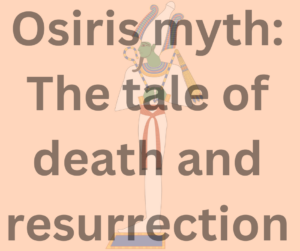
The Egyptians saw the afterlife as a perfect version of their life on earth. This realm, often referred to as the Field of Reeds, is a place of peace and abundance, reflecting the life they know without the hardships. It is a place where the soul, "Ba", can reunite with the body, "Ka", and live in harmony under the benevolent rule of Osiris.
Journey into the Underworld
Central to the journey to the afterlife is the preservation of the body through mummification. The Egyptians believed that the soul needed a well-preserved body to return to, which led to their elaborate embalming practices.
In addition, the journey is fraught with challenges, including the dangerous passage through the Duat, the underworld. In the afterlife, the heart of the deceased is weighed against the feather of Maat, symbolizing truth and justice. If the heart is balanced with the feather, it indicates a life lived in harmony with principles.
The proceedings continued, with the deceased having to declare his innocence before forty-two judges, each of whom represented aspects of the principles. These negative confessions are declarations that the deceased did not commit sins against the principles of Ma'at.
The ceremony is overseen by many deities and Osiris, who determines the worthiness of the soul and makes the final verdict on whether the soul should enter the field of reeds.
The role of funerary texts
Various funerary texts have been written about the passage of the deceased through the perils of the afterlife, the most famous of which is the Book of the Dead. These texts contain incantations, prayers, and instructions to aid the deceased in their journey into the afterlife and were often buried with them. The texts reflect a deep understanding of the afterlife and the challenges faced by the soul.




 English
  Bulgarian